Last updated November 20, 2026
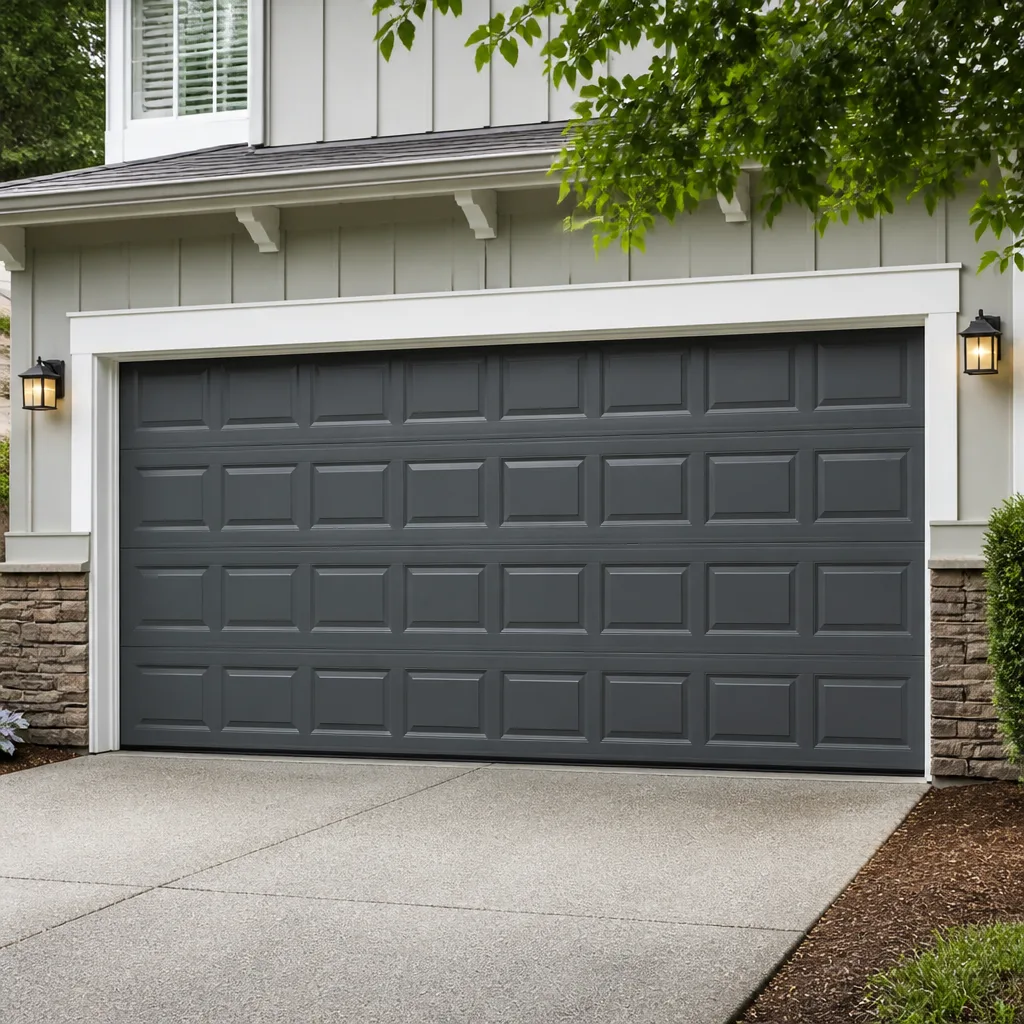 Raised-panel steel
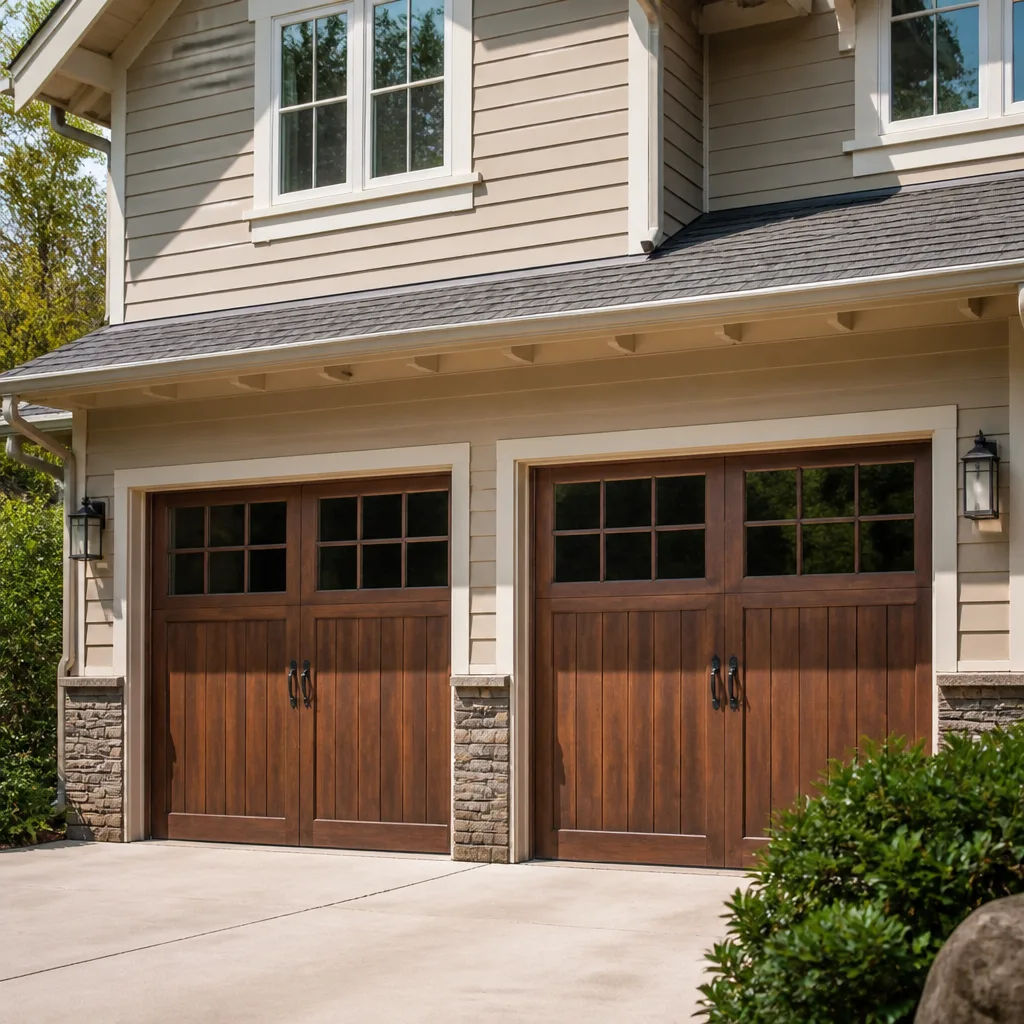 Carriage house
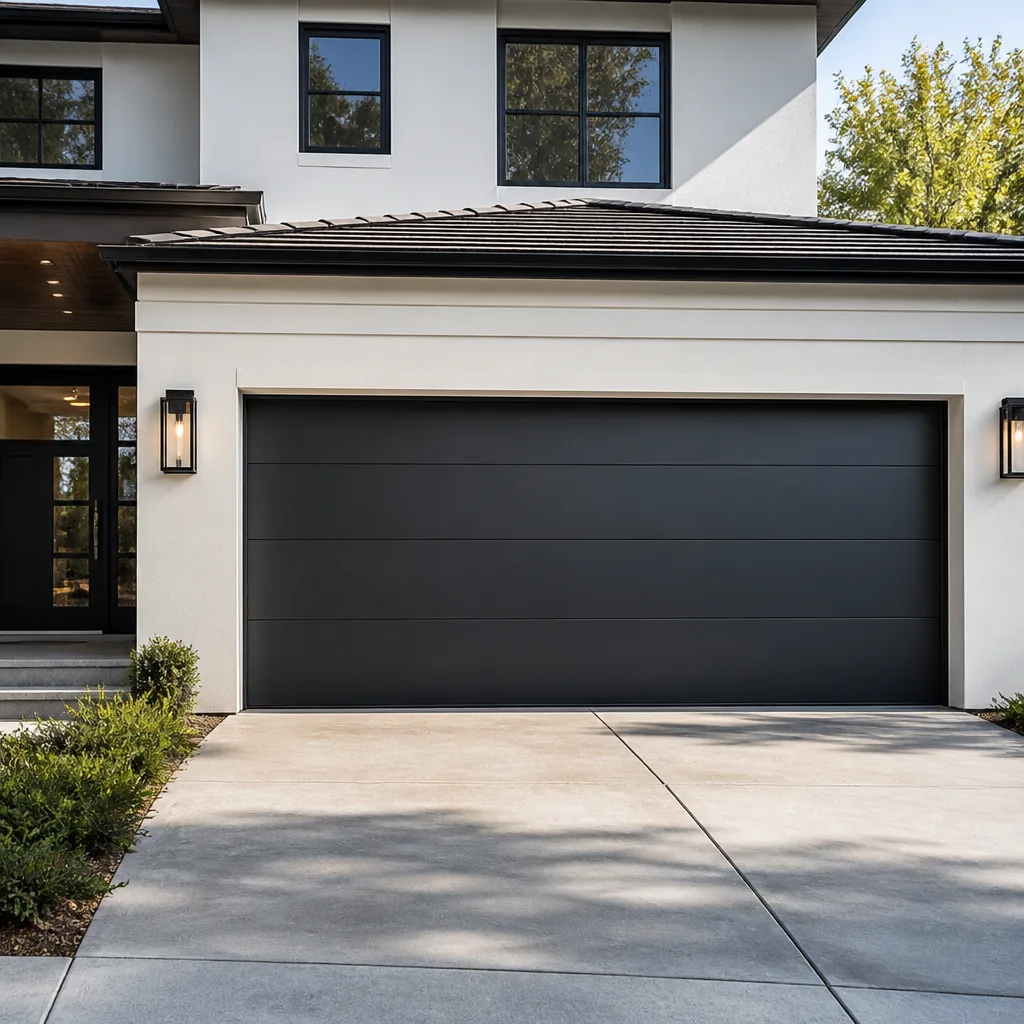 Modern flush
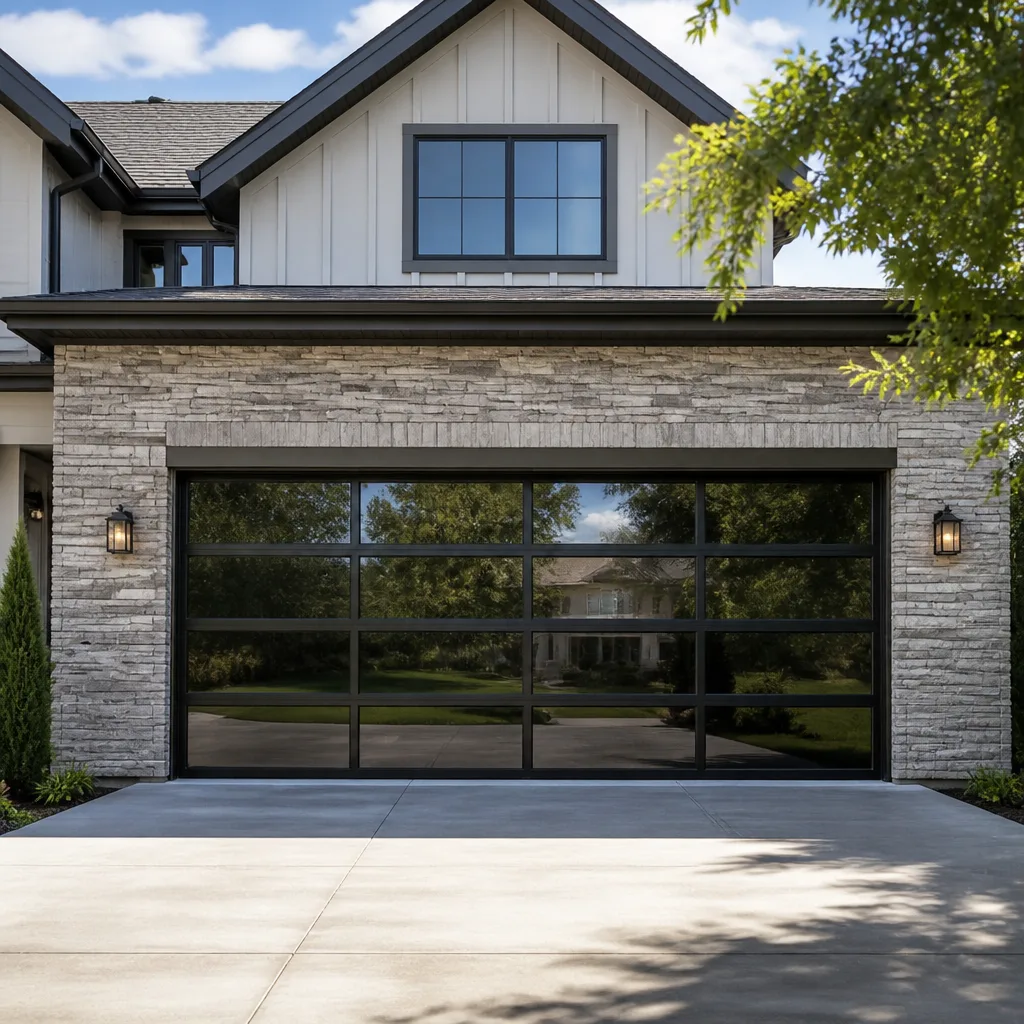 Full-view glass
 LiftMaster openers
 Chamberlain openers
Full 25-point door and opener safety check with every visit - springs, cables, rollers, tracks, and your LiftMaster or Chamberlain opener included
You get a price before we start. It does not change when the pro arrives.
Get your free estimateGarage Door Warning Signs: A Bedford-Stuyvesant Homeowner’s Reference Guide
Most garage door failures don’t announce themselves. They send small signals first: a shudder on the way up, a hesitation at the top, a faint grinding you hear only when the block is quiet. Homeowners tend to dismiss these as “just how the door sounds,” and that’s the mistake. By the time a spring snaps or a cable lets go, the warning signs were usually there for weeks. This guide walks you through what to listen for, what to look at, and when a call makes more sense than a screwdriver. We’ve put it together for Bedford-Stuyvesant, where rowhouses, brownstones, and converted carriage houses all run doors that age a particular way.
Quick Answer
Common garage door warning signs include a loud bang, sluggish lifting, visible spring gaps, frayed or slack cables, uneven movement on one side, grinding or squealing noises, a door that reverses without warning, and an opener that strains or hums without moving the door. In Bedford-Stuyvesant, the freeze-thaw cycles and the age of many original door assemblies make those signals show up faster than they do in newer housing.
Styles & brands we work with
- Raised-panel steel
- Carriage house
- Modern flush
- Full-view glass
- LiftMaster openers
- Chamberlain openers
Table of Contents
- Why Garage Door Problems Get Noticed Late in Bedford-Stuyvesant
- What the Noises Are Telling You
- Spring Warning Signs You Should Never Ignore
- Cable and Hardware Warning Signs
- Opener Warning Signs
- Movement and Performance Signals
- The Seven-Point Monthly Check
- Which Signs Mean “Call Today”
Why Garage Door Problems Get Noticed Late in Bedford-Stuyvesant
A garage door in Bedford-Stuyvesant rarely fails on its own terms. It fails attached to a building that already spent a century flexing through seasons. Many of the rowhouses and brownstones here have door openings that were cut long ago, and the door system has been replaced around that original framing, sometimes more than once. That layering matters, because a door that appears to sag is often a header or a track that has drifted rather than a spring that’s failing.
There’s a seasonal pattern too. A door might run fine all summer, then get stiff in January and loosen again by March. Cold tightens metal, warm air expands wood, and the constant back-and-forth in Bedford-Stuyvesant works every bolt, roller, and hinge slightly loose over a season. Homeowners hear the roughness as a winter annoyance and forget about it by spring.
What this means in practice:
- Shifting framing in older buildings can knock a track out of plumb without any obvious cause
- Concrete slabs settle, so a door’s floor seal that was tight last year may drag this year
- Cold-weather stiffening makes worn rollers and hinges show their age
- Original wood doors warp seasonally, more so than modern insulated steel doors
- An opener that struggled through a cold snap carries the strain into warmer months
If you’ve wondered whether your door is “allowed” to sound like that, the answer is no. A properly adjusted door operates quietly, moves evenly, and stops where it should. Anything else is worth a look.
What the Noises Are Telling You
Sound is the earliest signal a garage door gives you. A clean-running door makes a soft hum and a light tap when it meets the floor. Every other sound tells you something specific.
Grinding
Grinding usually means dry or worn rollers, or a track that’s out of alignment. It’s often the first symptom a homeowner in Bedford-Stuyvesant notices, because a rowhouse block carries sound. Left alone, grinding rollers wear into the track itself, which turns an inexpensive part swap into a track replacement.
Squealing or Squeaking
Squealing points at metal-on-metal contact, typically hinge pivots or roller stems that have lost lubrication. This one is usually the cheapest to fix early and the most annoying to live with.
Popping or Snapping
A pop during travel can mean a cable has jumped a drum or a panel is catching. If the pop happens at a consistent spot, the door is telling you where the problem lives. If it happens once and stops, watch for it returning.
Banging at the Start or Stop
Banging when the door starts moving signals slack in the opener’s chain or belt, or worn springs that no longer support the door’s weight evenly. Overhead springs work with the opener to lift the door; when they lose tension, the opener picks up the burden, and the strain shows up as a bang.
Grumbling or Straining from the Motor
A motor that sounds like it’s working much harder than it used to is a motor being asked to do more than it should. That could be a failing spring, a stuck roller, or a door that’s simply out of balance. In our experience, an opener that starts “talking louder” is almost always reporting a door problem, not an opener problem.
Total Silence from the Motor
If the door doesn’t move and the motor doesn’t make a sound, start with the basics: power, remote battery, wall switch, and the safety sensor alignment. If the motor hums but nothing happens, stop trying it and call. A hum-with-no-movement opener is usually reporting a broken spring or a jammed door.
Spring Warning Signs You Should Never Ignore
Springs are the most important warning-sign item on this list. They carry the full weight of the door, they’re under extreme tension at all times, and when they fail, they fail hard. This is not a DIY repair. A torsion spring can cause serious injury whether you’re standing near it or touching it.
What a Spring Failure Sounds Like
When a torsion spring breaks, it makes a sound like a gunshot or a heavy metal crack echoing through the building. Homeowners often think something fell or a car door slammed. If you hear that sound coming from the garage, don’t try to open the door afterward. It’s now hanging on the opener and cables alone.
Visible Warning Signs
- A visible gap in a torsion spring, usually a few inches along the coil
- Stretched extension springs with clearly uneven tension side to side
- Loose or dangling safety cables through extension springs
- A door that won’t stay up when opened manually, or won’t budge at all
- Loud bang followed by total loss of lift
- A whining noise during travel that wasn’t there before
What You Can Safely Do
You can look. Don’t touch. Check for a visible gap, listen for a sound you can’t explain, and note whether the door lifts easily or feels dead. Then pick up the phone. Spring replacement is a specialist job and needs to be matched to the door’s weight and cycle count, not guessed at. In older Bedford-Stuyvesant buildings, we often find a spring that was undersized for the door it’s carrying, which is why the failure came as a surprise.
When you do call, a proper spring repair includes a matched pair replacement in most cases, since springs wear at the same rate. Replacing one and leaving the sibling in place usually just postpones the next breakdown by weeks. If you’re looking at a pair, budget for a pair.
Cable and Hardware Warning Signs
Cables do the secondary work of holding the door’s weight and keeping it tracking true. They fail far less often than springs, but when they do, the door becomes unpredictable and dangerous. On the older Bedford-Stuyvesant doors we see, cables often sit alongside hardware that’s already seen its share of winters.
Cable Warning Signs
- Fraying or broken strands visible along the length
- Slack on one side while the other side stays tight
- Off-center travel, where one side rises before the other
- A door that hangs crooked when fully open
- Cables that have jumped the drum on the header above the door
Hardware Warning Signs
- Bent or broken hinges, especially the middle and bottom ones
- Rollers that are flat-spotted or that wobble in their brackets
- Loose track bolts and a track that’s shifted off plumb
- Cracked or bent panels after a bump from a car or a heavy impact
- A bent or missing bottom bracket, which is under load and should never be loosened
If you see any of these, stop cycling the door. Cables and bottom brackets are both under load and both genuinely dangerous if they snap while you’re working near them. This is a call-a-professional situation, not a tighten-it-yourself one.
Opener Warning Signs
Modern openers are tough, and the majority of opener “failures” we’re called out to are actually door problems the opener is struggling with. Still, openers do give warning signs of their own, and knowing which is which saves you money.
Opener Warning Signs to Note
- Remote works only from close range, which often means a weak battery or a sensor issue
- Door reverses before closing, often a misaligned safety sensor or something in the path
- Wall switch works but remote doesn’t, which points at the remote or receiver
- Motor hums, door doesn’t move, which usually means the door is stuck or the spring has failed
- Motor runs but the chain or belt hangs slack, indicating a tension or sprocket issue
- Clicking from the unit with no response, which can mean a logic board fault
- Lights flicker on their own, which can indicate a power or board issue
Matching the Opener to the Door
We work on the door you have, and that includes the major opener brands. LiftMaster and Chamberlain cover most of the smart-home connected systems we see in Bedford-Stuyvesant, myQ pairing included. Genie handles many of the older installs around the neighborhood, and Craftsman units go back a long way across Bed-Stuy houses and brownstones. If your opener is one of those, our technicians have up to 8 years of experience working across them.
One diagnostic worth doing before a service call: disconnect the opener using the red manual release handle (pull it straight down while the door is closed) and try lifting the door by hand. If it rises with one hand and stays put, the door is balanced and the problem likely lives in the opener. If it feels heavy or drops, the problem is the door, and the opener is just the messenger. Reconnect it before you call.
Movement and Performance Signals
Watching the door move tells you almost as much as listening to it. Stand back and simply observe the next time you open it. You’re looking for evenness, straight travel, and a clean stop.
Signs to Watch For
- Jerky or hesitant movement, with pauses or lurches
- One side lagging behind the other
- Dragging along the floor at the bottom run
- Rubbing the header at the top of travel
- Reversal without contact during closing
- Stopping halfway down or refusing to close fully
- Opening to a different height than it did last month
What Each Sign Points To
Uneven travel is a cable, track, or spring issue. Floor dragging is a seal or track issue. Random reversal is usually a safety sensor that’s drifted, been knocked by a car, or been blinded by sun at the wrong angle. A door stopping partway is often a limit switch in the opener that’s drifted. Opening to a different height is a sign the opener’s travel limit needs adjustment, and continuing to run it in that state can damage the door.
If the door is a Clopay, Amarr, or Wayne Dalton that came with the building or was installed during a renovation, the manufacturer’s limit settings still apply. Continuing to run a door that’s clearly out of adjustment accelerates wear on the whole system.
The Seven-Point Monthly Check
A monthly two-minute walkaround catches most of the warning signs above before they turn into a repair. Here’s what we suggest for Bedford-Stuyvesant homeowners. None of it requires a tool.
- Listen. Open and close the door once. Note any grinding, squealing, banging, or hesitation that wasn’t there before.
- Look at the springs. From a safe distance, check for visible gaps in the torsion spring or uneven tension on extension springs. Don’t touch them.
- Look at the cables. Check for fraying or slack. Don’t reach into the cable path while the door is moving.
- Watch the travel. Observe the door opening and closing. It should move evenly and stop cleanly at both ends.
- Check the safety sensors. The two small sensors at the bottom of the track either side should have steady lights, not flickering or off.
- Test the manual release. Disconnect the opener and lift the door by hand. If it feels heavier than you remember, take note and reconnect it.
- Check the weather seal. Look for daylight or a draft under the door. A worn seal lets water and cold air into a garage and can signal the door’s drop is out of adjustment.
Two minutes a month is enough. It won’t prevent every breakdown, but it reliably catches the ones building up to a failure.
Which Signs Mean “Call Today”
Some warning signs give you time to plan. Others don’t. Here’s the short list of “call today” signals, and every one of them is worth treating as urgent:
- A loud bang from the garage, followed by a door that won’t lift. That’s a broken spring.
- The door is stuck open. Your garage is now an unlocked, exposed space, and the door is likely hanging on the opener alone. This is an emergency service call.
- The door is stuck closed with a car inside, or in a way that blocks a shared driveway.
- Visible cable fraying or slack with a door that’s clearly off its track.
- A door that slams shut instead of lowering smoothly, which means the springs have lost their hold.
- Cracked glass or a damaged panel that’s compromised the door’s structural integrity.
For emergencies like those, we offer emergency garage door service for doors that are stuck open, stuck closed, or unsafe to leave. If your door has clearly crossed from “annoying” to “can’t wait,” call now rather than booking around other work. For the routine signals, an appointment is fine; most repairs are straightforward and the appointment slot saves everyone time.
The line to draw: anything involving springs, cables, bottom brackets, or genuine safety risk is a call today. Anything involving noise, sluggishness, or misalignment at the seal level is worth scheduling in the near future. If you’re not sure which pile you’re in, describe the sign over the phone. That’s usually enough to sort it.
Common Mistakes to Avoid
- Ignoring a shift in sound because the door still opens. A grinding door keeps opening for weeks, then the track wears and a simple fix becomes a big one.
- Trying to lift a door with a broken spring to get the car out. The door is heavier than it appears and can drop on you. Call for help instead.
- Spraying WD-40 on a torsion spring and assuming it’s fixed. Lubrication belongs on hinges, rollers, and tracks, not on springs that need professional replacement.
- Replacing one spring out of a pair. Springs are matched and wear together. Replacing one leaves the other ready to break in the same season.
- Tightening the bottom bracket yourself. It’s under tension and is one of the most dangerous parts on the door. Leave it to a technician.
- Assuming a hesitant door means a failing opener. Most of the time the door is out of balance and the opener is doing extra work, so a new opener wouldn’t fix anything.
- Letting a stuck-open door sit overnight, especially in Bedford-Stuyvesant where many garages open onto the street or into a shared yard. That’s a security issue as well as a repair.
See the difference
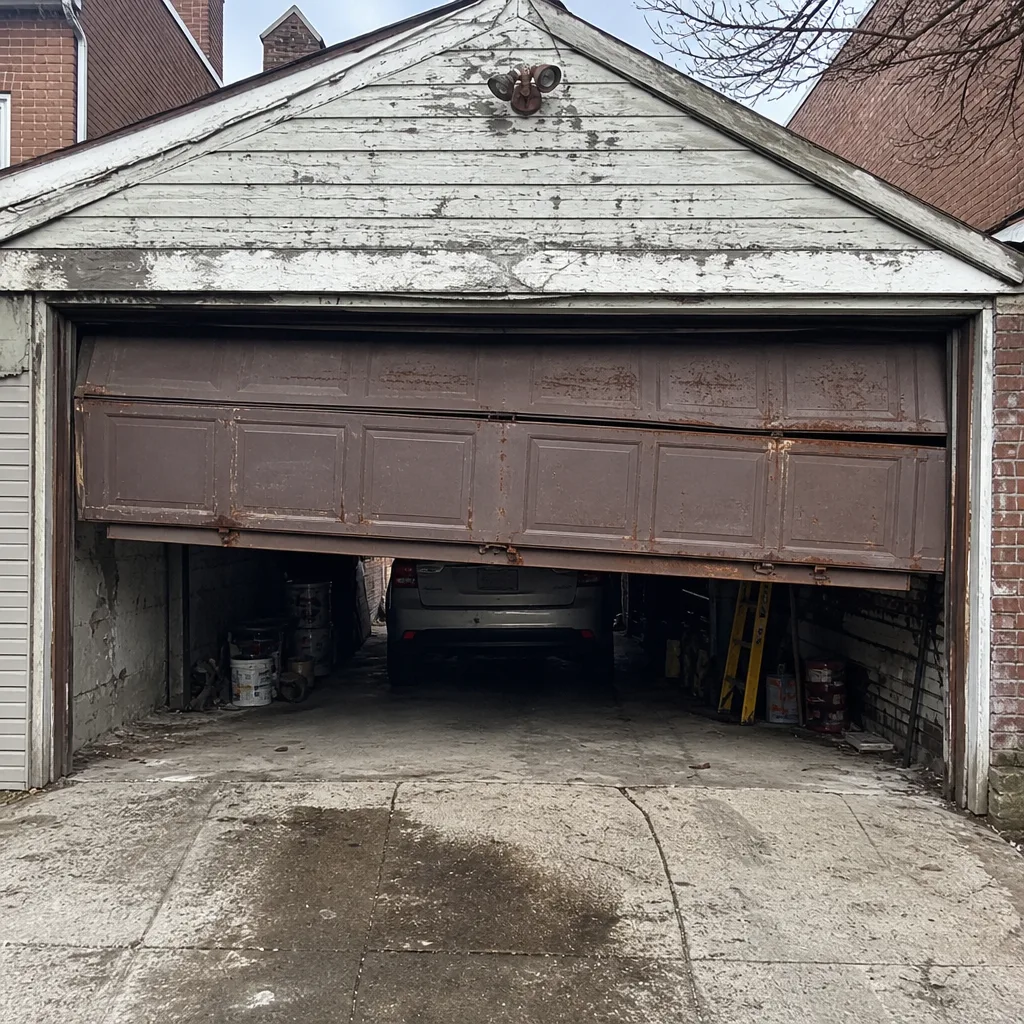 Before
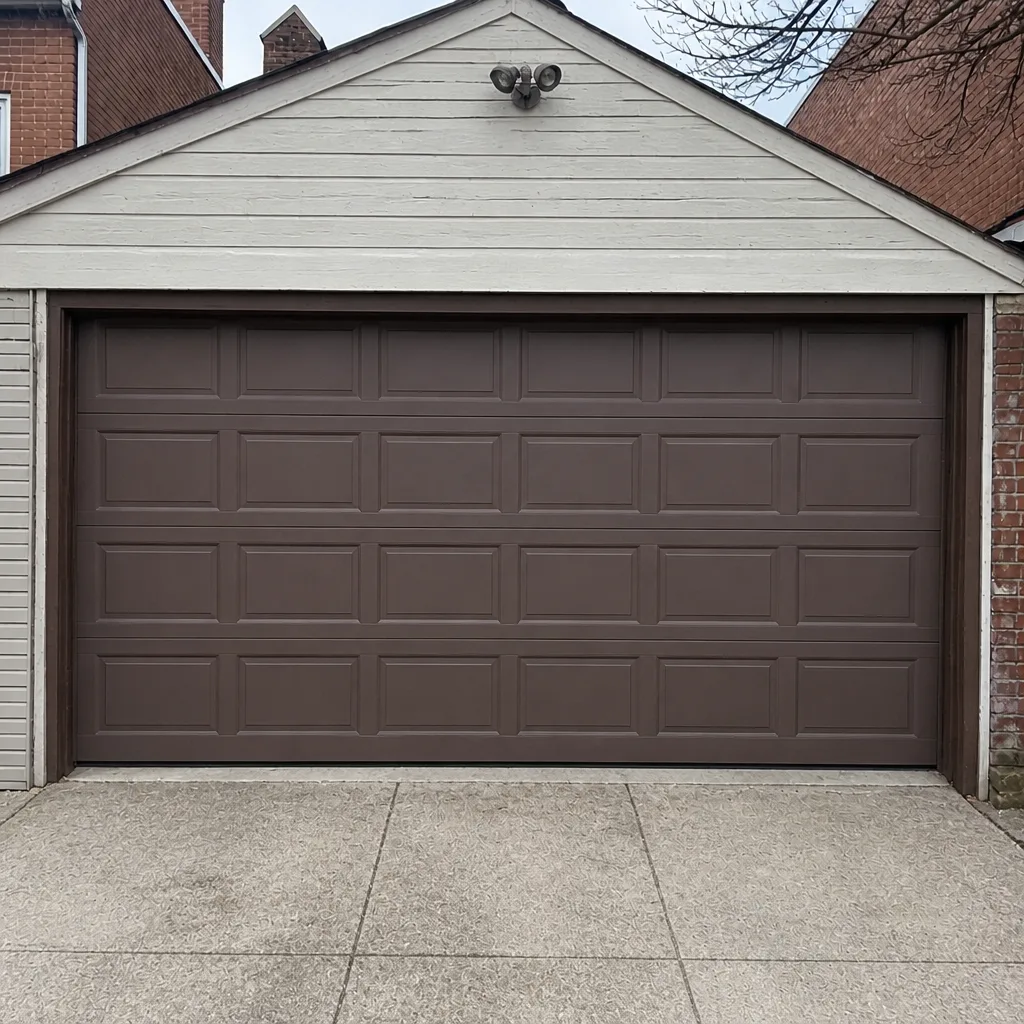 After
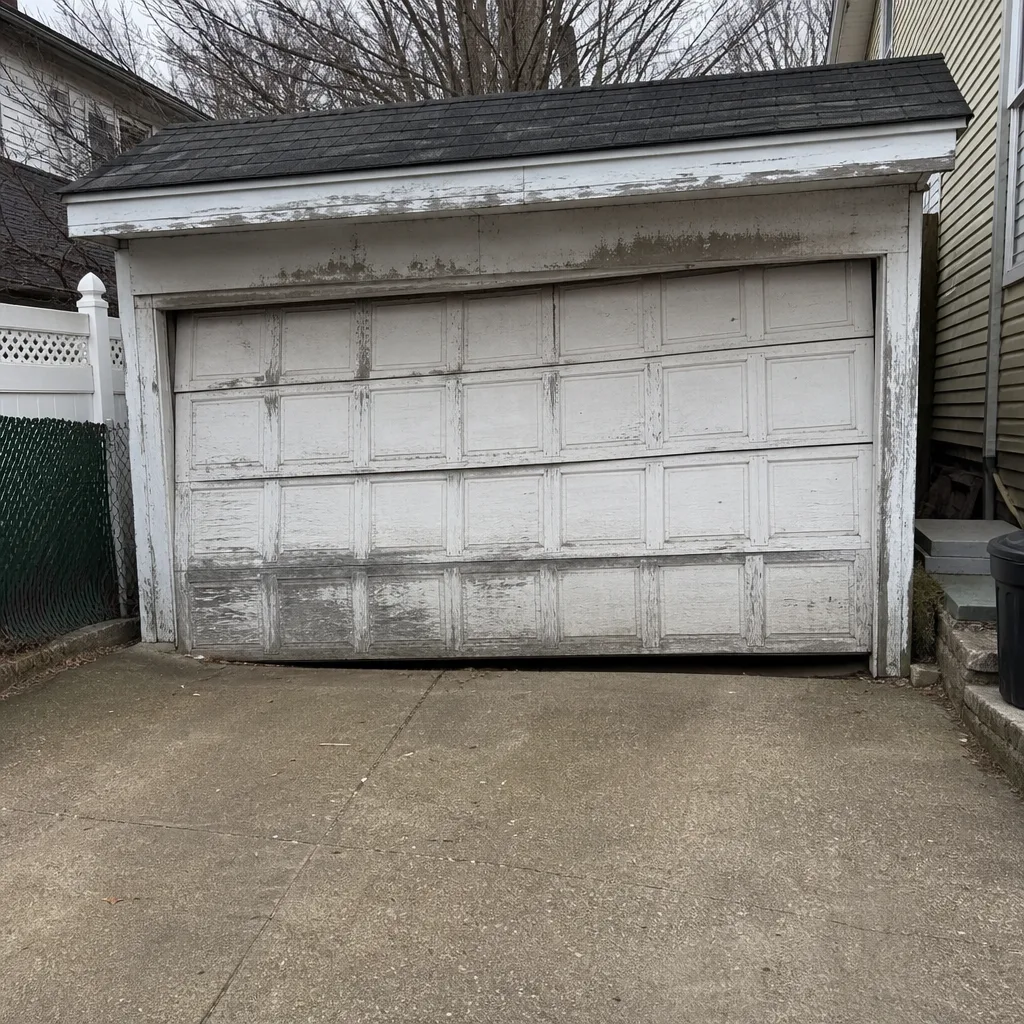 Before
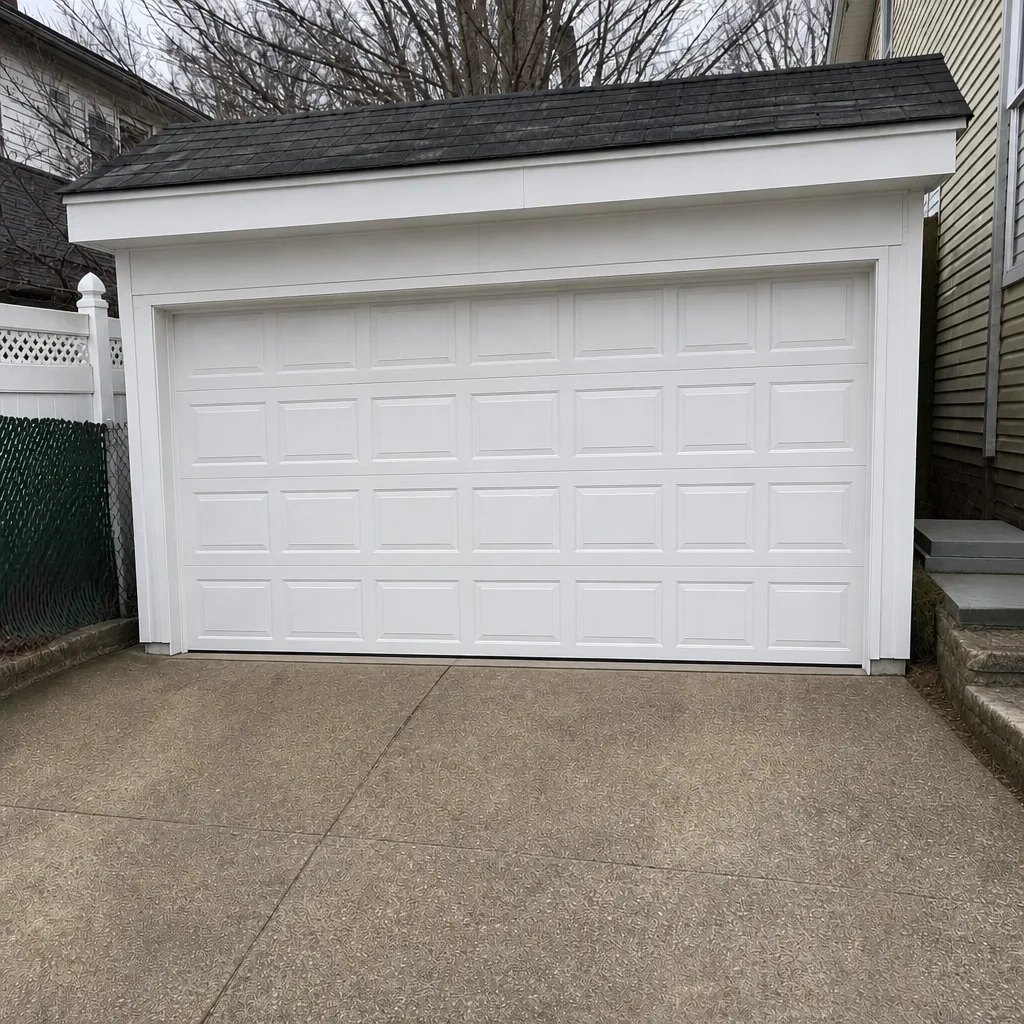 After
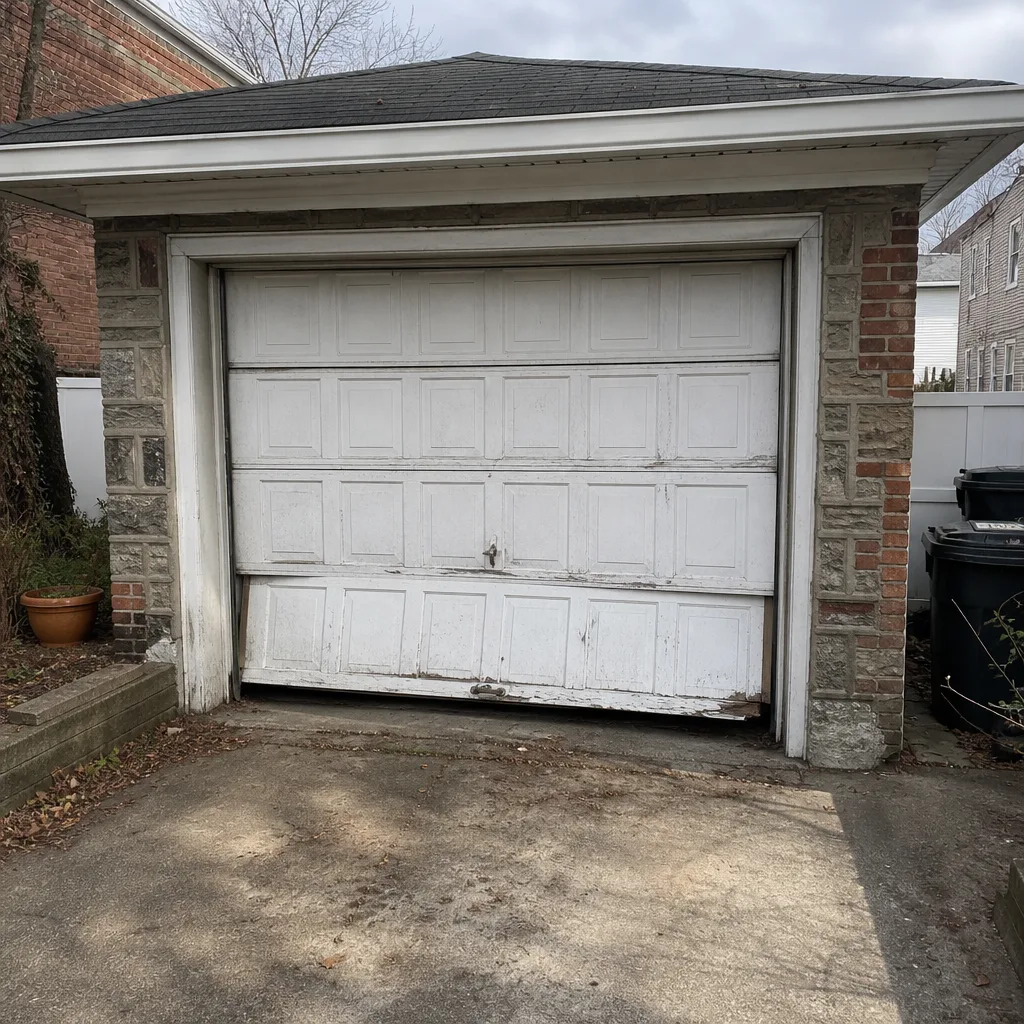 Before
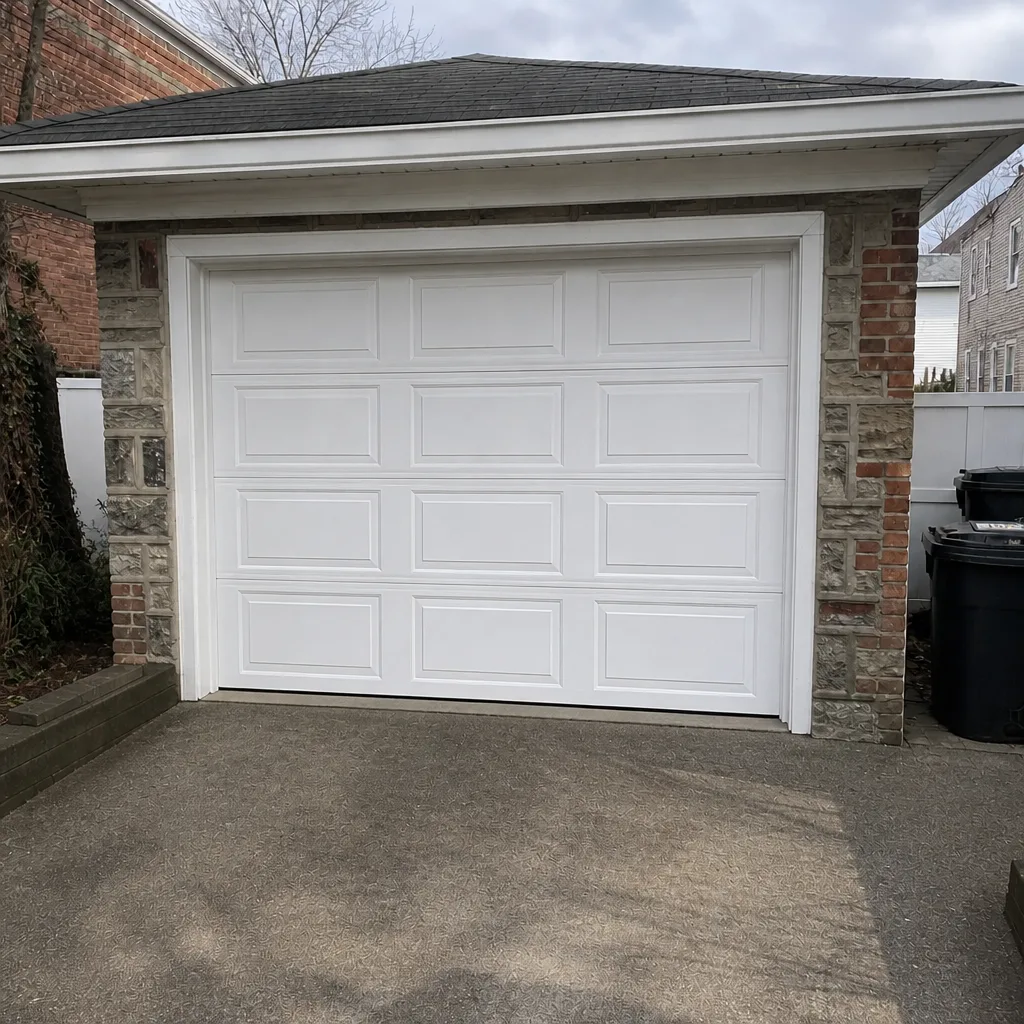 After
When to Call a Professional
Call a professional for any spring or cable issue, any door that’s stuck open or closed, any door that won’t stay up or drops on its own, and any opener that hums without moving the door. Also call if you’re repeatedly adjusting the same thing and it keeps drifting, because that pattern usually means a deeper issue with the track, the framing, or the door’s balance.
The signs above are the whole reason this guide exists. If you’ve read this far and something rings true, it’s worth a look. garage door repair Bedford-Stuyvesant handles every category on this list, from a noisy roller swap to a full spring replacement or a new door installation. Free estimates in Bedford-Stuyvesant. Call (844) 905-0472 to book yours. Our technicians have up to 8 years of experience, and we bring the full range of repairs and installations under one call.
Frequently Asked Questions
The clearest signs are a visible gap in the torsion spring, a stretched extension spring with uneven tension, and a door that feels unusually heavy when lifted manually. A whining or straining sound during travel is also a warning. Springs rarely announce themselves beyond that, so a visual check once a month is worth the two minutes. If you see a gap, call (844) 905-0472 and stop using the door.
Not usually urgent, but it doesn’t get better on its own. Grinding is most often worn rollers or a track that’s out of alignment, and it gets more expensive the longer you run the door. Book an appointment to have it looked at before the track itself wears. If the grinding is paired with slow or uneven movement, treat it as more pressing. Call (844) 905-0472 for an estimate.
No. A door with a broken spring should not be operated, either manually or with the opener. The door is heavier than its mechanism can safely manage and the risk of it dropping is real. Shut the power to the opener if it’s convenient, and leave the door alone until a technician arrives. Call (844) 905-0472 for emergency service.
A door reversing before contact is usually a safety sensor issue, most often misaligned sensors at the base of the track or something in the door’s path. It can also be a limit setting that’s drifted. Both are quick to check, and both should be fixed rather than ignored. Call (844) 905-0472 for a diagnostic visit.
Repair is usually the right call when the door’s structure is sound and the problem is mechanical: springs, rollers, hinges, opener electronics. Replacement makes more sense if the door’s panels are cracked, warped seasonally, or the door’s insulation is no longer doing its job. Either way, the assessment should be based on specific inspection rather than age alone. Call (844) 905-0472 for a free estimate on both options.
We work on the door you have. That includes LiftMaster, Chamberlain, Genie, Clopay, Amarr, Wayne Dalton, Craftsman, and Raynor, plus the myQ ecosystem on the LiftMaster and Chamberlain side. We don’t push brand switches; the priority is diagnosing and fixing what’s there. Call (844) 905-0472 with your opener model if you’re not sure.
The Bottom Line
Garage doors rarely fail without warning. They grind, squeal, jerk, stop short, or sag before something serious happens. The catch is that those signals are easy to miss when the door still opens. Read this guide once, walk around your door once a month, and you’ll catch most problems while they’re still a small fix. Anything involving springs, cables, or a stuck door belongs with a technician, not a weekend project. When you’re ready, one call covers the hardware and the opener.
Written by the team at Garage Door Repair Bedford-Stuyvesant.
Ready to look at that warning sign you’ve been hearing? Call (844) 905-0472 for a free estimate. We’ll take a look, explain what we find, and give you a clear quote before any work begins.